
Have you ever been to a restaurant with a 4-page menu and a website that provides little information about the food philosophy, the talent that creates it and the attention to service they provide? Who cares? Is the chef that great? Is everything that good? Is there really that much enjoyment in all that stuff? Probably not. People want to make good decisions quickly based on quality, value and reputation among other things. Pitching your Business has the same mentality. Entrepreneurs, business owners, salespeople, program directors and many others have to know many different audiences and be able to grab their attention quickly. Your audience may be a customer, an investor, a banker, a key new hire, or a visitor at a trade show. They all need to hear something that connects them to the value you provide and people typically do not like to wait. Communicating clear and connective information quickly improves the opportunity to begin a customer relationship. That relationship … [Read more...]
Red Flags to Avoid an IRS Audit

Small business owners are some of the world’s busiest people. Keeping up with operations, sales, service and running the company can feel like a never-ending process. An audit can significantly add to the stress and workload of small companies, so it’s important to maintain general standards to avoid being selected for an audit. Generally, the IRS can go back three years for an audit. However, if some significant errors occur on tax returns, it allows the IRS to go back another few years. Below are some red flags that will increase your chance of an audit. Not Reporting All Taxable Income You must report all 1099s and W-2s. Remember, the IRS gets copies of all the 1099s and W-2s you receive. So, the IRS will find out if you overlook any taxable income. Deducting Business Meals, Travel and Entertainment The new tax law did away with the deduction for entertainment expenses. However, there are a few exceptions including: Entertainment treated as … [Read more...]
Impact of Covid on Federal contracting

As 2021 starts, coronavirus cases are up and it seems that coronavirus will continue to impact small business for some time to come. These impacts are felt by nearly all small businesses, including federal contracting personnel. Spending by civilian agencies of the federal government was at an all-time high in 2020. Many of these purchases were COVID-related, and COVID-related expenses will continue to dominate federal spending in 2021. The largest areas of spending are expected to be on vaccines and technology to support telehealth and telemedicine. Spending is also expected to increase for technology initiatives that support the military, such as unmanned satellites, cybersecurity, and artificial intelligence. Other federal contracting trends to expect this year include: With the increase in remote-work capabilities, federal contractors can opt to hire qualified workers from around the country. Wages in Northern Virginia are among the highest in the nation. Some … [Read more...]
Projecting Cash Flows is Essential to Business Success

In order to be successful, it is essential that a small business owner take the time to understand how cash flows in and out of the business and to be able to manage cash flows. Owners who take the time to project cash flows and make plans to mitigate cash flow shortages before they happen have much higher rates of business success. Learning more about your business’s cash flows is helpful whether you are a new business or have been in business for years. Below we will answer the most common questions many new business owners have about cash flow projections. What is Cash Flow Projection? Cash flow projection is used to analyze the funds that a business owner anticipates receiving and spending. The projections are broken up into two sections: anticipated revenues and anticipated expenses. The cash flow projection is completed on a month-to-month basis and generally projects one to two years into the future. Why is it Important to Project Cash Flow? Business owners use cash … [Read more...]
Creating a Logo: A 7-Step Guide

“You never get a second chance at a first impression”. Successful companies build brands that attract the right customers and inspire them to become loyal fans and purchasers. Your logo is a significant part of the first impression that your business will make, so you want to make sure it's done well. Creating a logo is a great opportunity for you to define and express your brand's personality, culture and values. Most startups do not have marketing budgets which would allow them to hire a design firm. However, it is possible for them follow a few important steps and create a standout, professional logo at an affordable cost. Before starting the design process, it’s important to think strategically. 1. Define your brand identity. Understand the core value and personality of your company because this will influence the look and feel of your logo. What do we do better than anyone else? What are the values that are important to us as a company? Why did we start this … [Read more...]
Customer Discovery in 4 Steps: A Guide to Validate a Market Before Investing in your Company
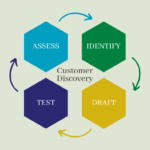
The best business ideas are validated by customers in the marketplace before the product or service is fully developed. Savvy entrepreneurs research the wants and needs of prospective customers with the ambition of creating value through unique and memorable experiences. Throughout the LEAN process, opportunities originate early with customer data. The value and experience are refined throughout the execution period with refinement of the product or service with feedback from customers. Everyone has an opinion. Arguably, the opinion that matters least initially is that of the entrepreneur. It is easy to eat your own cooking. The one that matters most is in the marketplace. The market is a synthesis of relationships, influencers, and decision makers. Furthermore, it is in the marketplace that the entrepreneur will learn what goods and services are in need, who will buy them, and how they will buy them. The following are 4 simple steps you can use to conduct a basic customer … [Read more...]
Successful Entrepreneurs Solve a Problem for their Customer
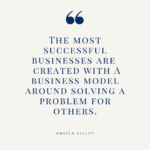
One of the most common questions that our consultants hear is “What type of business should I open?” Many aspiring entrepreneurs have dreams about forming a business that will make them rich or allow them to leave a legacy for future generations. Not only is this wishful thinking counterproductive to the ideation process, but it leads to the creation of businesses that want for customers. Here's what we tell these clients: Give up on brainstorming the next multi-million-dollar business idea and instead think about solving a real problem. Starting a business is not about creating something that you think is great; it’s about creating something that your customers think is great. When forming your next business idea, consider: What skills do you have that you could provide to a customer? Could you provide a service that would save others time? What knowledge do you have that you could share as a consultant? What connections do you have to suppliers or distributors … [Read more...]
A Rapidly Changing Business Landscape in 2020

Record numbers of businesses closed during the pandemic is offset by a rapidly changing business landscape in 2020 with a record number of new business starts. Coronavirus is having a profound impact on America’s small business community. The second quarter of 2020 saw a significant decline in the number of businesses owned by baby boomers; people in their 50s - 70s. Nearly 2.34 million of these businesses either permanently closed or changed hands. This represents at 25% decline in the number of baby boomers who are business owners or self-employed. However, this loss of businesses was offset by 930,000 new business starts in the same quarter. New business starts hit a record high in the third quarter of the year. The U.S. Census Bureau’s statistics on Business Formation indicates that nearly 1.6 million businesses were started. This number is nearly double the next highest number of business starts in any one quarter over the past 15 years. Approximately 500,000 of new … [Read more...]
Business in 2020: Learn New Skills and Improve Your Weaknesses

Many businesses have modified their operations since the beginning of this year. Purchases are handled differently, inventories have shifted, and business models have changed just to name a few. Adapting your business model during the pandemic is a necessity to remain relevant in today’s business environment. Change and new challenges create an opportunity for growth. “Work on your business, not in your business”: take a high-level look at your personal skills and processes and ask yourself if there is room for improvement. Business management skills: Can you delegate some tasks? Have an employee shadow you so they can learn new skills to complete these tasks. This will reduce your workload so that you can attend to more pressing concerns for your business. Organizational skills: Could a process be more efficient? While working, find what could be fine-tuned so the process runs smoothly. Leadership skills: Set expectations for you and your employees to follow … [Read more...]
How to Incorporate Lean Startup Principles in your Business

A decade ago, the Lean Startup movement generated much buzz in the startup world and companies and entrepreneurship curricula began integrating this alternative startup approach into their processes and materials. The Lean Startup method, pioneered by Steve Blank and Eric Ries, encourages founders to take an action-oriented, quick and cheap approach to starting a business. Previously, the startup process consisted of writing a business plan, pitching it to investors, assembling a team, creating your product and selling it to the best of their ability. In a study conducted by the Harvard Business Review in 2013, about 75 percent of startups who largely followed this conventional approach failed. In contrast, the lean startup process offers a cost-effective alternative. It favors experimentation over big design upfront development. In short, founders turn their idea into a “minimally viable product” (MVP) and test them out on potential customers. Depending on the feedback, they either … [Read more...]